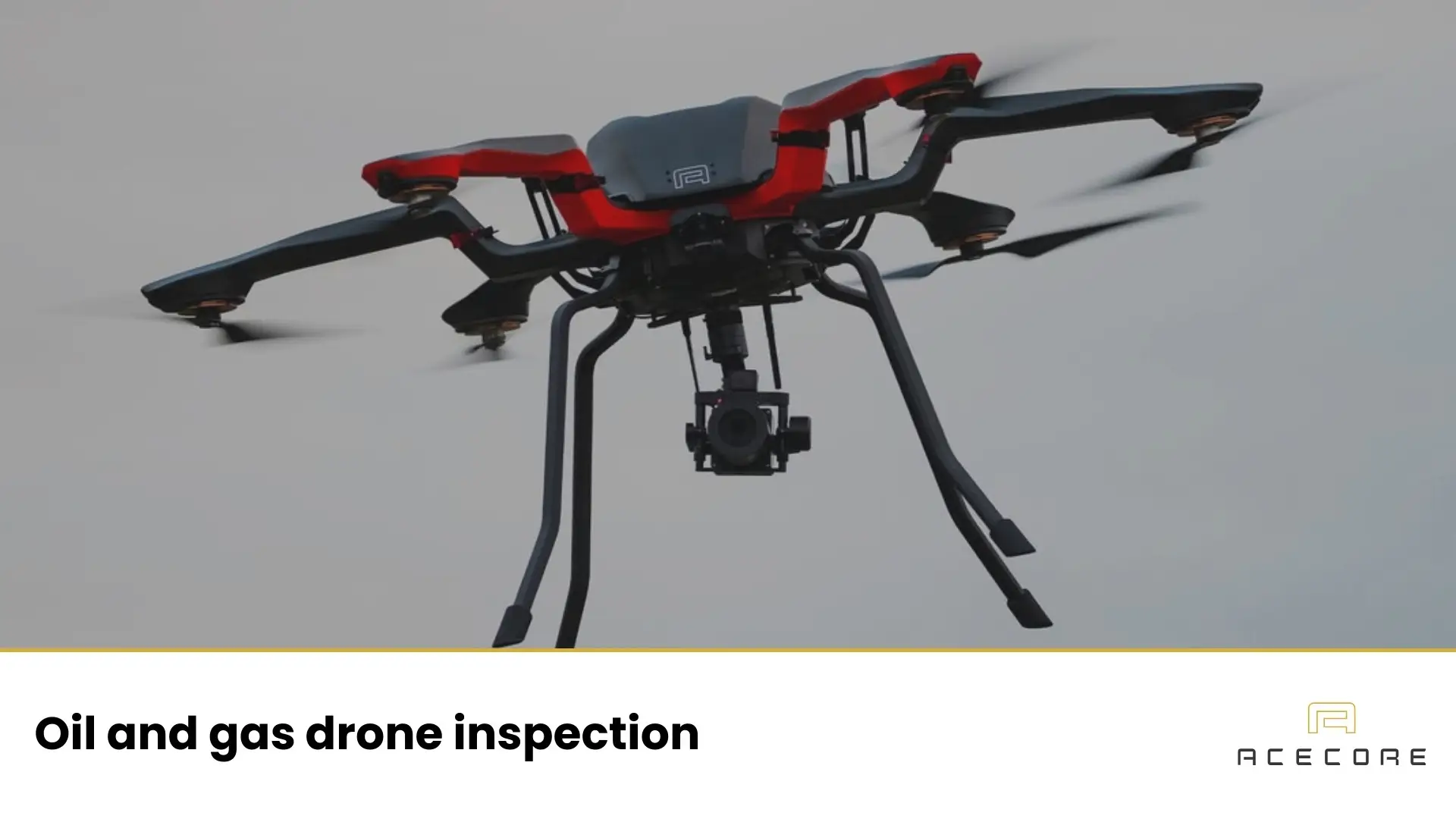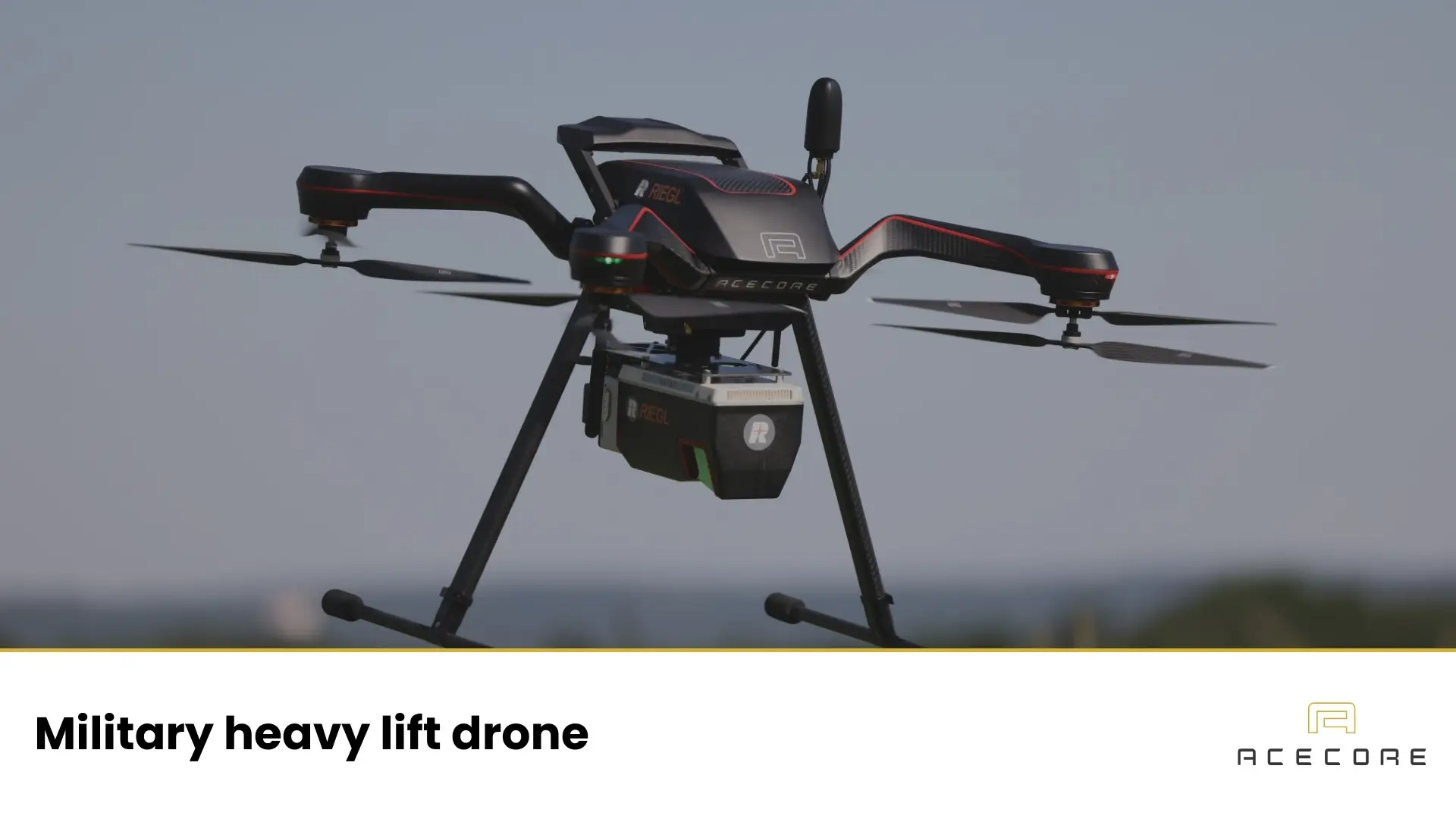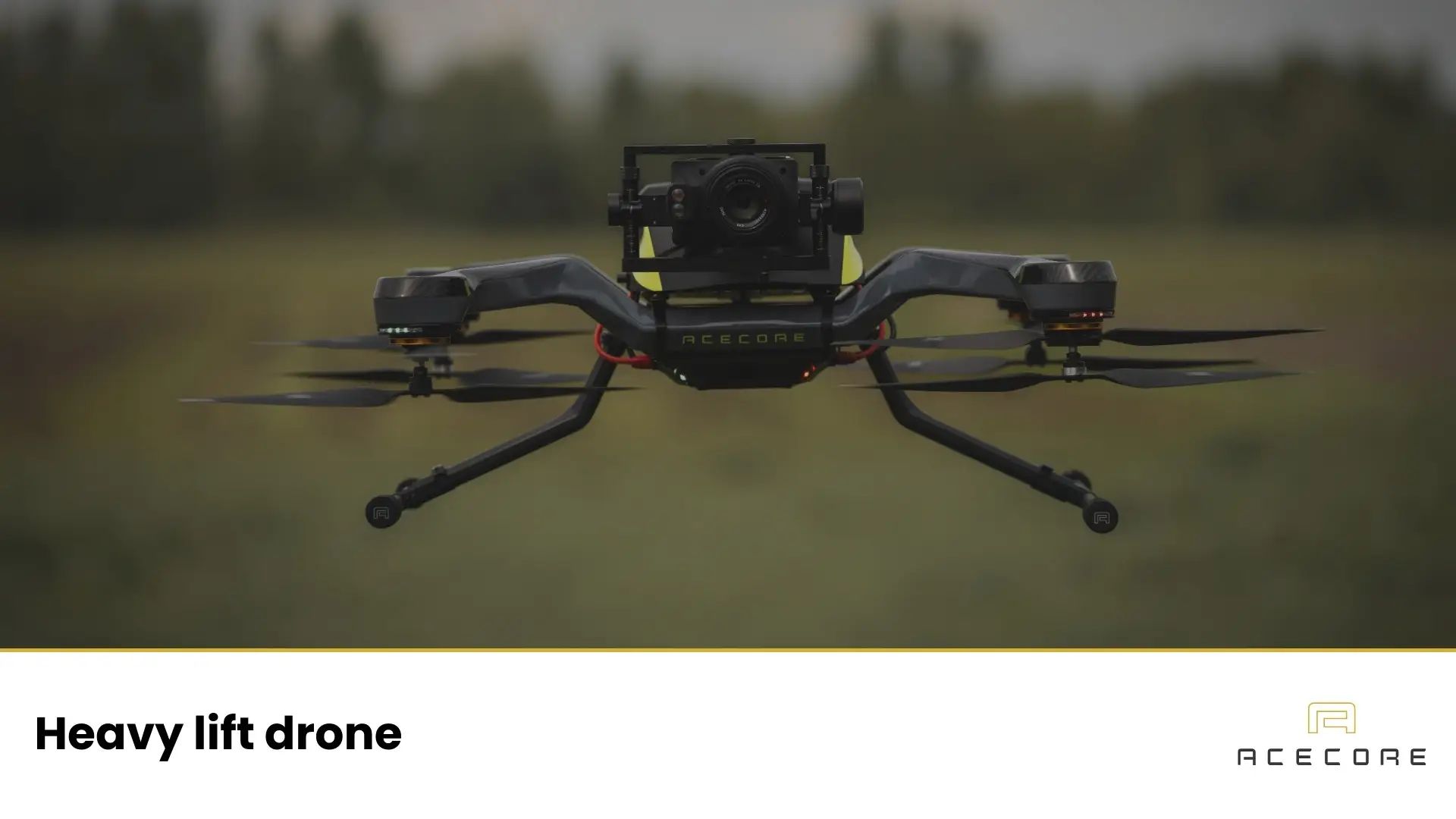

Inspection drones have transformed the way industries monitor, maintain, and safeguard their critical assets. Instead of relying solely on time-consuming, costly, or risky methods, professionals now turn to drones to perform inspections that are faster, safer, and more precise. Whether it’s scanning the length of a powerline, capturing thermal data from a rooftop, or generating high-resolution imagery of a bridge, drones offer perspectives and data collection that traditional methods simply can’t match.
At Acecore, we’ve dedicated ourselves to building inspection drones that don’t just meet industry demands – they redefine what’s possible in the field. Every UAV platform is handcrafted in the Netherlands with rugged carbon fiber construction, advanced flight controllers, and modular payload integration. That means operators can choose the exact tools they need, from LiDAR scanners and thermal cameras to full-frame optical sensors, and rely on them in any weather condition.
What is a Drone Inspection?
A drone inspection is the process of using an unmanned aerial vehicle (UAV) equipped with specialized sensors to assess the condition of assets, infrastructure, or environments. Instead of sending people up towers, across rooftops, or into hazardous sites, operators can fly a drone to capture the required data safely from the air. This can be as simple as collecting high-resolution photos of a roof or as advanced as using LiDAR and thermal imaging to reveal hidden structural issues in bridges, powerlines, or pipelines.
Traditionally, inspections required scaffolding, cranes, helicopters, or even rope access teams – methods that are often slow, expensive, and risky. Drone inspections either replace or complement these approaches, offering a quicker, safer, and more data-rich alternative. By minimizing downtime and providing detailed, georeferenced information, UAVs help teams make better decisions while reducing operational costs and safety concerns.
Why You Should be Using Drones for Inspections
For years, industrial inspections have been limited by safety concerns, cost, and the logistics of accessing hard-to-reach assets. Drones change that equation. They solve long-standing challenges in inspection workflows by offering a safe, fast, and data-rich alternative to traditional methods. With UAVs, professionals can get closer to critical infrastructure, capture high-quality data in real time, and reduce the need for expensive equipment or risky manual labor.
Safety
Safety has always been one of the biggest concerns in industrial inspections. Traditional methods often involve sending people into hazardous situations – climbing tall towers, scaling wind turbines, or entering confined spaces. Every one of these tasks carries a level of risk. By introducing drones into the workflow, those risks are dramatically reduced. A UAV can perform the same inspection without putting human lives in danger.
Accessibility
One of the greatest advantages of inspection drones is their ability to reach places that are either too dangerous, too expensive, or simply impossible for people to access safely. Think of towering wind turbines hundreds of meters high, offshore oil rigs battered by waves and salt spray, or bridges suspended over busy highways. These environments are not only difficult to access but can also be hazardous for human inspectors.
Cost Efficiency
Inspection work has traditionally been resource-intensive, requiring helicopters, scaffolding, or large crews to get the job done. These methods not only drive up costs but also involve lengthy setup times and logistical challenges. By comparison, drones offer a leaner, more cost-effective alternative that delivers the same – or often better – results.
Speed & Efficiency
Time is often critical in inspections, especially when dealing with essential infrastructure like powerlines, pipelines, or transportation networks. Traditional methods can take days or even weeks to plan and execute, while drones can be deployed in a matter of minutes. Once airborne, they quickly cover large areas and capture detailed data far faster than manual methods allow.
High-Quality Data
Inspection drones aren’t just about convenience – they’re about delivering data that is precise, reliable, and actionable. High-quality information allows teams to make better decisions, spot potential failures before they become critical, and plan maintenance with confidence. This is where payload flexibility plays a central role.
Reduced Downtime
One of the hidden costs of traditional inspections is downtime. Shutting down a wind turbine, halting production at a refinery, or closing a bridge for scaffolding doesn’t just delay operations – it impacts revenue. Drone inspections minimize or even eliminate these disruptions by allowing inspections to take place while assets remain in use.
Industrial Drone Inspection Applications
Inspection drones have proven their value across a wide range of industries, becoming indispensable tools for monitoring, maintenance, and compliance. By combining advanced sensors with rugged flight platforms, industrial drones can adapt to different environments and inspection types – from energy networks spread over hundreds of kilometers to detailed scans of individual buildings.
Acecore’s inspection drones are used in sectors where uptime and precision are critical: energy and utilities, infrastructure and transportation, as well as real estate and commercial property. In each of these industries, UAVs don’t just replace older methods – they expand what’s possible, making inspections more frequent, less intrusive, and significantly more cost-effective.
Energy & Utilities
The energy and utilities sector depends on infrastructure that is often spread out over vast distances and exposed to the harshest environments. From high-voltage powerlines and offshore wind farms to oil and gas pipelines, these assets must be inspected regularly to ensure safety, reliability, and compliance. Traditional methods are slow, expensive, and risky, but utility inspection drones have quickly become the industry’s preferred solution.
Powerline Inspection
Powerlines stretch across challenging terrain and are constantly exposed to wind, storms, and vegetation growth. Regular inspections are essential to prevent outages and ensure public safety. Traditionally, this has required helicopters or climbing crews, both of which are costly and potentially dangerous. Powerline inspection drones provide a safer, faster, and more detailed alternative.
Wind Turbine Inspection
Wind turbines are vital for renewable energy, but their height and remote locations make inspections difficult and hazardous. Rope access teams and cranes have traditionally been used to examine blades and nacelles, but these methods are time-consuming, costly, and risky. Wind turbine drone inspection offers a smarter approach by bringing high-resolution sensors right to the turbine without shutting it down or endangering personnel.
Pipeline Inspection
Oil, gas, and water pipelines often span hundreds of kilometers across remote or difficult terrain. Monitoring them for leaks, corrosion, or damage has traditionally involved ground patrols, manned aircraft, or expensive satellite imaging. These methods can miss small but critical issues and often require significant time and resources. Drone pipeline inspection provide a more efficient, precise, and scalable solution for better pipeline investigation.
Dam Inspection
Dams are massive structures that play a critical role in water management, energy production, and flood prevention. Drone dam inspection is essential for public safety, but the scale and complexity of these structures make inspections challenging. Traditional approaches often require scaffolding, boats, or divers – all of which are time-consuming, costly, and sometimes risky.
Offshore Inspection
Offshore environments are among the toughest for inspections. Oil rigs, wind farms, and marine infrastructure are constantly exposed to saltwater, heavy winds, and unpredictable weather. Offshore platform inspections typically depend on vessels, rope access crews, or helicopters, resulting in high costs and significant operational complexity. Drone-based inspection for offshore platforms streamlines this process by delivering advanced sensor data directly to the asset, reducing both risk and expense.
Infrastructure & Assets
Civil infrastructure is the backbone of modern society, from bridges and railways to construction sites that shape tomorrow’s cities. Regular inspections are essential to ensure safety, compliance, and long-term performance. Traditional methods often involve costly closures, scaffolding, or large inspection crews, making them disruptive and inefficient. Drone asset inspection now offer a more practical alternative by delivering precise, real-time data without halting operations.
Bridge Inspection
Bridges are critical links in transportation networks, and their structural integrity must be monitored closely to ensure public safety. Traditional bridge inspections often require lane closures, scaffolding, or rope access, which can cause significant disruption to traffic and increase operational costs. Drone bridge inspection provide a non-intrusive alternative that delivers equally – if not more – detailed insights.
Railway Inspection
Railway networks cover vast distances and include critical assets such as tracks, bridges, and overhead lines. Ensuring their safety and reliability requires regular inspections, but sending crews out on foot or using manned vehicles is time-consuming and often disruptive to operations. Drones provide a faster and more efficient way to monitor railway infrastructure without halting traffic or requiring extensive manpower.
Construction Site Inspection
Construction projects are dynamic environments where progress tracking, safety monitoring, and accurate surveying are essential. Traditional methods like manual site walks or ground-based surveying can be slow and leave gaps in the data. Drone inspection for construction sites makes it possible to capture a complete, up-to-date view of the site quickly and efficiently.
Buildings & Property
For property managers, developers, and facility operators, inspections are an important part of maintaining asset value and ensuring safety. Traditional approaches often involve sending workers onto rooftops or scaffolding around buildings, which takes time and increases risk. Drones streamline this process by capturing detailed, high-resolution data quickly and safely.
Roof Inspection
Roofs are among the most common points of failure in buildings, yet they can be difficult and dangerous to access for manual inspections. Issues like leaks, structural damage, or wear around solar panel installations often go unnoticed until they become costly problems. Drone roof inspection make inspections faster, safer, and far more precise.
Commercial Property Inspection
Commercial buildings, from office complexes to warehouses, require regular inspections to ensure safety, efficiency, and compliance with regulations. Traditional methods often involve scaffolding, cherry pickers, or large inspection crews, which can disrupt operations and drive up costs. Drone commercial property inspection offer a smarter, less intrusive way to gather the same – and often better – information.
Which Drones are Best for Inspections?
Not every inspection is the same, which is why choosing the right drone for the job is so important. Some missions demand precision and stability for close-up imaging, while others require heavy payload capacity or extreme endurance to cover vast areas. Acecore designs its drones to meet these diverse needs, offering operators the flexibility to choose a system that fits their specific workflow.
From compact, versatile drones that excel in urban environments to heavy-lift platforms built for rugged industrial applications, Acecore provides inspection drones that are both specialized and adaptable. Every model is handcrafted, weather-resistant, and modular, ensuring that it can be tailored with the right sensors, payloads, and accessories to maximize performance. This versatility makes Acecore drones the go-to choice for professionals across industries who demand reliability and precision in their inspections.
Dit model blok inladen met daaronder meer context over de specifieke toepassing van elke Acecore Drone
Acecore Zetona
The Zetona electric drone is purpose-built for detailed inspection work where precision and clarity matter most. Its defining feature is the front-mounted 2-axis gimbal, which provides an unobstructed view from directly overhead (zenith) to straight down (nadir). This unique design allows operators to capture every angle of an asset without the airframe interfering with the shot, making it especially effective for close-up inspections of structures like wind turbine blades, bridges, or powerlines.
Equipped with the 60-megapixel Sony ILX-LR1, the Zetona delivers razor-sharp imagery that reveals the smallest cracks or defects. Its RTK positioning ensures centimeter-level accuracy, while the powerful stabilization system keeps the platform steady even in challenging conditions. With up to 30 minutes of endurance, the Zetona provides the reliability and precision needed for high-value, high-risk inspections where data quality is non-negotiable.
Acecore Zoe
The Zoe is Acecore’s most versatile inspection drone, designed to adapt to a wide range of missions. With up to 47 minutes of flight time and a modular payload bay, Zoe offers the flexibility to integrate optical cameras, LiDAR units, or thermal sensors depending on the inspection requirements. Its aerodynamic carbon fiber frame not only makes it sleek but also ensures stability in winds up to 35 knots and rain up to 10 mm/h.
Since its introduction in 2017, Zoe has evolved into a reliable workhorse for professionals in energy, infrastructure, and property management. Its modular design means components such as batteries, landing gear, and payload mounts can be easily swapped or upgraded, making the system future-proof. Whether you’re performing rooftop thermal scans, inspecting bridges, or monitoring construction progress, electric Zoe drone combines endurance, resilience, and adaptability in a compact platform that fits almost any inspection scenario.
Acecore Noa
The Noa is Acecore’s heavy-lift inspection platform, built for demanding industrial missions that require both endurance and payload capacity. With the ability to carry up to 20 kg and fly for up to 60 minutes, Noa is perfectly suited for large-scale inspections such as powerlines, wind farms, or LiDAR mapping operations. Its rugged carbon fiber construction and redundant six-motor setup ensure reliability, even in tough weather and high-risk environments.
Noa’s modular design allows operators to configure the system around their needs, whether that means mounting a full-frame camera for detailed imaging, integrating advanced LiDAR sensors for corridor mapping, or attaching thermal payloads for energy inspections. This adaptability makes it a true powerhouse for inspection professionals who need a platform that can take on the toughest missions without compromise.
Acecore Noa Hybrid
The Noa Hybrid drone takes endurance to a new level, making it the go-to choice for large-scale or remote inspection projects. Powered by a gasoline-electric hybrid system, it can remain airborne for up to 265 minutes on a single mission, eliminating the flight time anxiety common with traditional drones. Despite its extended range, it retains redundancies such as dual backup batteries and a modular design to ensure safe recovery in case of unexpected events.
Minimal vibration levels and a liquid-cooled 4000W continuous powertrain make the Noa Hybrid an ideal platform for precision applications like LiDAR scanning or pipeline monitoring. Its rugged build withstands harsh environments, while the payload capacity of 6 kg ensures it can carry high-end optical, thermal, or mapping sensors. For operators inspecting pipelines, offshore platforms, or vast energy networks, the Noa Hybrid delivers the endurance, reliability, and flexibility needed to cover more ground with fewer flights.
Acecore: Elevating Drones for Inspections
At Acecore, we believe inspections should be smarter, safer, and more effective. That’s why everydrone we build is handcrafted with a focus on rugged performance, modular design, and seamless integration. Our commercial drones are designed to thrive in the harshest environments while carrying the advanced payloads professionals rely on for accurate, actionable data.
But we don’t stop at the hardware. We provide full in-house integration, expert pilot training, and long-term support to ensure our customers get the most out of their UAV systems. From the first demo flight to years of reliable operation, we stand by our partners with the knowledge and service that keep inspections running smoothly.
If you’re ready to take your inspection workflows to the next level, Acecore is here to help. Reach out to our team to discuss your specific inspection needs, request a demo, or explore how our drones can be tailored to your operations. Together, we’ll elevate inspections to a higher standard – safer, faster, and more precise.