
Wind energy is one of the most promising sources of renewable power, but maintaining high-performing wind turbines requires precision, consistency, and safety. Traditionally, wind turbine inspections have relied on rope access, cranes, or scaffolding – methods that are costly, time-consuming, and potentially hazardous. Each inspection often means shutting down turbines, exposing technicians to risk, and increasing downtime.
Drones have changed that equation. By combining advanced imaging sensors, precision flight control, and automated data collection, drone inspections can capture every detail of a turbine’s structure in a fraction of the time. Modern drones for inspection can hover close to blades, nacelles, and towers while transmitting real-time imagery and thermal data to engineers on the ground.
As wind farms continue to grow in both size and complexity, the need for consistent, high-quality inspection data is becoming crucial. Reliable drone-collected data helps operators maximize turbine performance, detect early signs of wear or damage, and plan maintenance before issues escalate. This not only protects investments but also ensures turbines operate at peak efficiency, generating clean energy without unnecessary interruptions.
Why Use Drones for Wind Turbine Inspections?
Wind turbine inspections are vital for the long-term health and efficiency of renewable energy assets. Drones provide a significant advantage over traditional inspection methods through their speed, safety, and ability to capture precise visual and thermal data. For the wind energy sector, drones represent not just innovation but practical progress – reducing costs while enhancing safety and operational awareness.
Cut Downtime and Operational Costs
With drones, a full turbine inspection that might once have taken hours – or even required shutting down operations – can now be completed in minutes. There’s no need for rope teams, lifts, or scaffolding, and in many cases, drones can inspect turbines while they remain active. This drastically minimizes production loss.
A drone fleet can cover an entire wind farm in a fraction of the time of manual inspections, delivering actionable data without interrupting power generation. The result is lower operational costs and higher asset availability, a key factor for profitability in large-scale renewable projects.
Enhance Safety for Technicians
Manual turbine inspections expose technicians to significant risks, including working at extreme heights, near moving blades, and in challenging weather conditions. Drones remove the need for direct human exposure to these hazards.
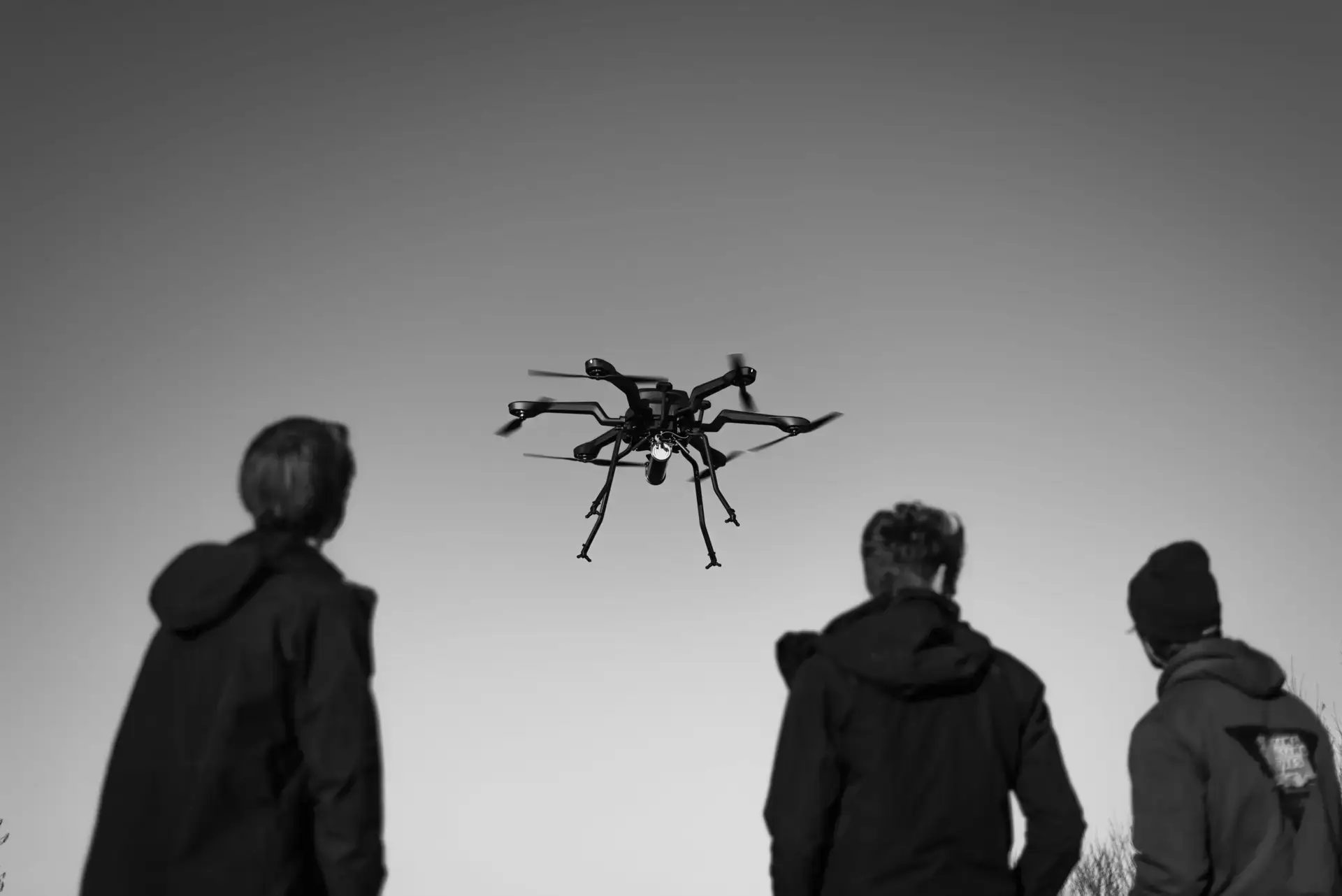
Instead of climbing hundreds of meters, technicians can safely operate from the ground, collecting high-resolution imagery and thermal data remotely. By integrating drone inspections into maintenance workflows, operators comply with modern safety regulations while fostering a culture of safety-first operations.
Unmatched Precision and Data Quality
Modern inspection drones deliver crystal-clear visuals and precise thermal data that help operators detect microcracks, erosion, or delamination before they escalate into major issues. High-resolution optical cameras, LiDAR, and thermal sensors work together to create detailed datasets, allowing teams to make informed maintenance decisions.
These advanced technologies enhance asset longevity, enable condition-based maintenance planning, and reduce unplanned downtime. For operators, the result is reliable data that leads to smarter, faster, and more cost-effective wind turbine management.
Application of Drones for Wind Turbine Inspections
Drones are now an integral part of the wind energy industry, offering inspection capabilities that cover every stage of a turbine’s lifecycle – from construction and commissioning to routine maintenance and end-of-life assessment.
They are used not only for visual checks but for structural analysis, 3D modeling, and digital twin creation. These applications help maintenance teams understand both the current condition of each turbine and the trends that affect long-term performance.
Blade Surface Inspection
Drones capture ultra-detailed images of turbine blades, revealing cracks, erosion, lightning damage, and other surface imperfections invisible to the naked eye from the ground. Repeatable flight paths ensure consistent imaging over time, making it possible to track degradation patterns and plan timely interventions.
With automated flight planning and stabilized payloads, drone inspections deliver consistent, objective, and repeatable results – improving both the speed and reliability of blade condition assessments.
Thermal Inspection of Blades and Nacelles
Thermal sensors detect anomalies beneath the surface – like delamination, overheating, or trapped moisture – before they become visible issues. By identifying these hidden defects early, thermal inspections reduce maintenance costs and prevent major component failures.
For nacelles, thermal imagery provides insight into motor and gearbox performance, helping operators maintain smooth, efficient turbine operation even in demanding weather conditions.
Nacelle and Tower Inspection
Drone inspections allow detailed analysis of hard-to-reach nacelles, towers, and connection joints without the need for cranes or rope access. The drones’ precision control and stability enable them to capture close-up visuals safely and efficiently, even in strong winds.
Maintenance teams gain high-quality imagery of bolts, seams, and structural features, ensuring that every part of the turbine meets operational standards without placing personnel at risk.
Offshore Wind Turbine Inspection
Offshore wind farms introduce added challenges – saltwater corrosion, unpredictable weather, and limited access. Drones excel here by reducing the need for costly vessel trips and manual inspections.
Equipped with long-endurance systems and all-weather resistance, they capture consistent data across large offshore arrays. Their use significantly cuts inspection time and cost while improving safety for offshore crews and increasing the overall availability of renewable assets.
3D Modeling and Digital Twin Creation
Drones equipped with LiDAR or high-resolution photogrammetry sensors can generate precise 3D models of turbines. These digital representations form the foundation of digital twin technology, allowing operators to monitor structural integrity, analyze performance trends, and predict maintenance needs over time.
This data-driven approach enhances operational planning and helps operators make informed decisions that extend turbine lifespan and efficiency.
Post-Repair and Commissioning Verification
After maintenance or component replacement, drones verify repair quality with precise before-and-after data. High-resolution imaging provides clear documentation for compliance, quality assurance, and recordkeeping.
This process ensures accountability, transparency, and reliability throughout the turbine’s operational lifecycle, helping operators maintain trust and operational excellence in every project.
Acecore Drone Solutions for Wind Turbine Inspection
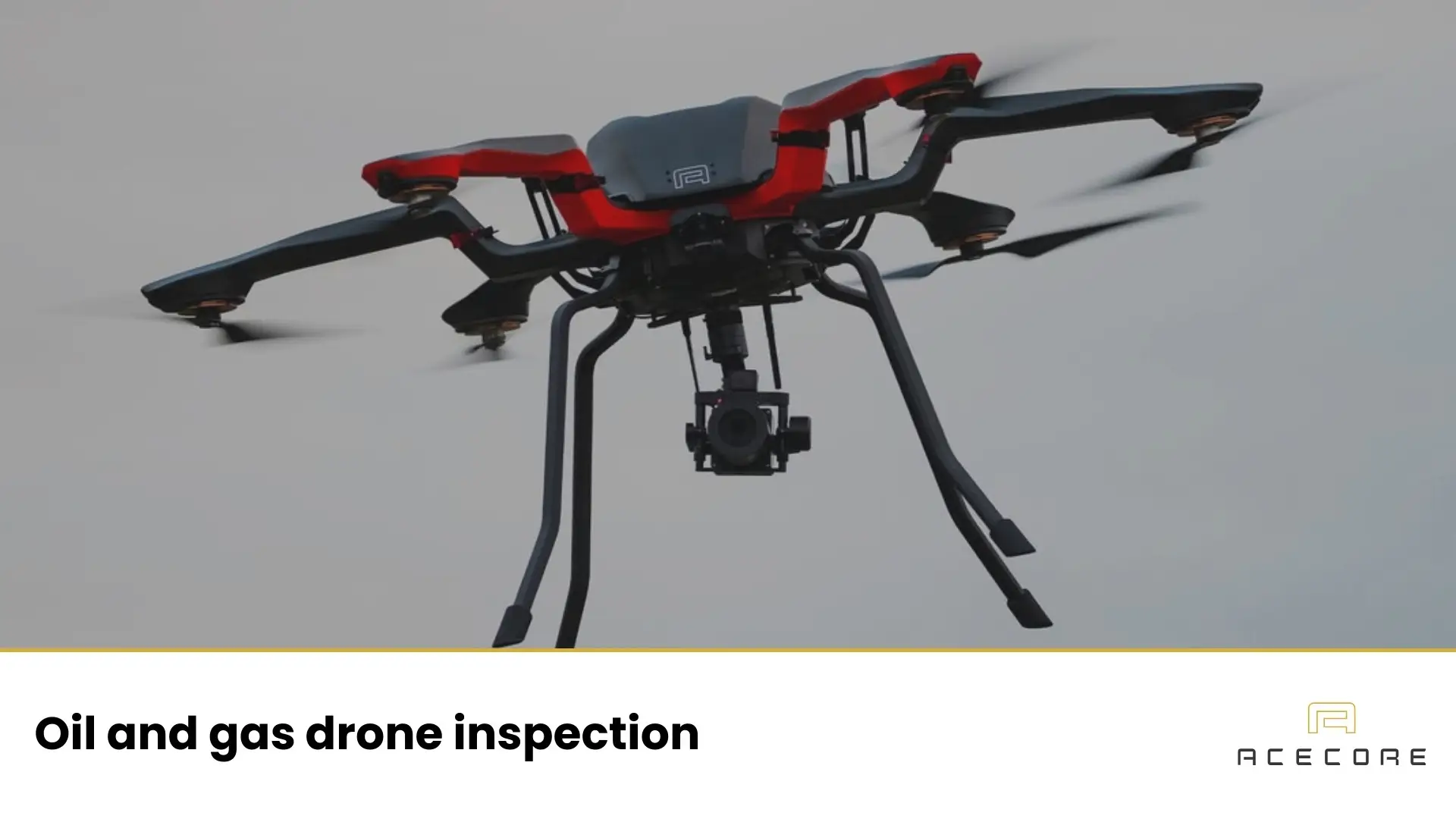
Acecore develops and manufactures professional-grade commercial drones engineered for demanding inspection missions. Handcrafted in the Netherlands, each system is built from premium materials and optimized for performance in harsh environments.
From agile quadcopters to long-endurance heavy-lift platforms, Acecore drones combine precision engineering with modular flexibility. Designed for real-world reliability, they are trusted by professionals in the wind energy sector for both onshore and offshore inspections.
1. Zetona
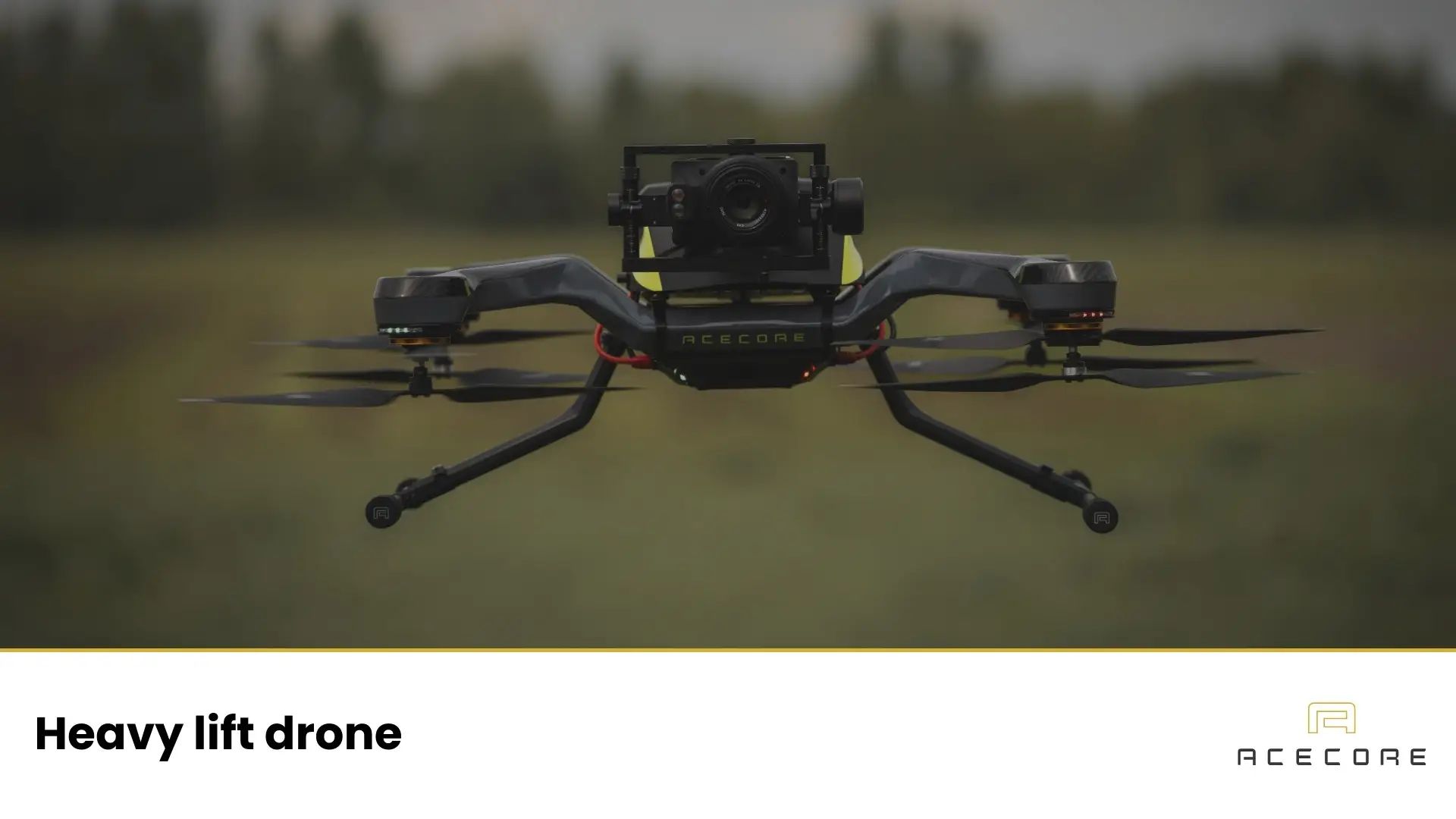
The professional drone Zetona is Acecore’s purpose-built precision inspection drone. Its front-mounted, upward-facing gimbal allows an unobstructed view of blade roots, nacelles, and tower joints – ideal for close-up inspections in confined areas.
With a 60-megapixel Sony ILX-LR1 payload and 30-minute flight endurance, the Zetona delivers razor-sharp imagery for high-value, high-risk applications. Its coaxial propulsion and RTK positioning ensure ultra-stable flight, even in turbulent wind conditions.
2. Zoe
Compact yet powerful, the aerial drone Zoe is Acecore’s most versatile drone. It’s designed for agile, blade-level inspections and smaller-scale missions that demand mobility and precision. With up to 47 minutes of flight time, strong wind resistance (up to 35 knots), and modular payload options, Zoe enables maintenance teams to cover more turbines in less time.
Its aerodynamic carbon-fiber frame, weatherproof build, and customizable configurations make it the ideal choice for efficient onshore wind turbine inspections.
3. Noa & Noa Hybrid
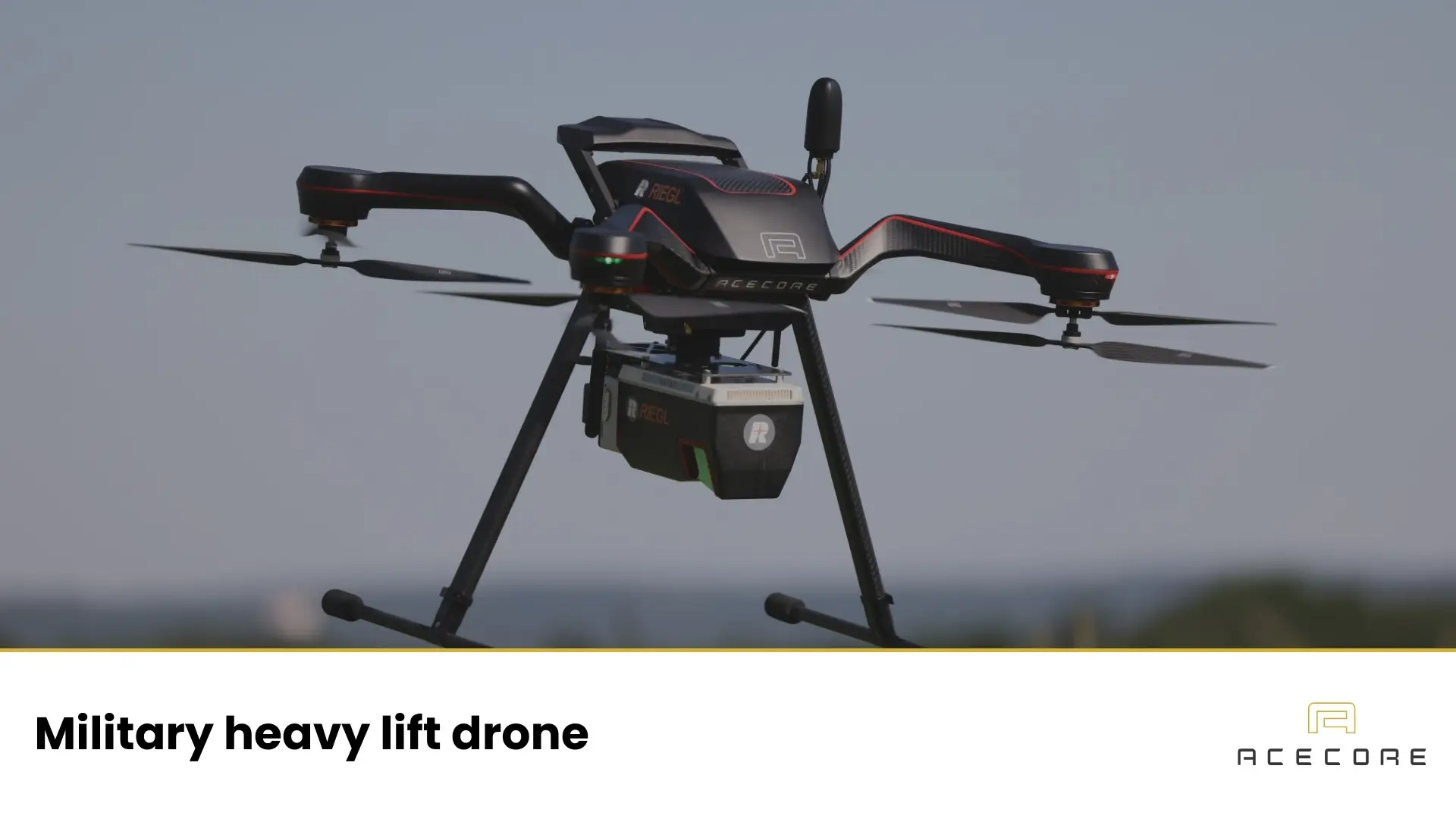
For large-scale and offshore inspections, the Noa and Noa Hybrid are Acecore’s heavy-lift endurance champions. The electric Noa can carry payloads up to 20 kg for over an hour, while the Noa Hybrid drone offers extended flight times of up to 265 minutes.
These platforms are built for long-range, high-demand missions where endurance and redundancy are critical. Their modular design, rugged construction, and ability to integrate high-end LiDAR or thermal sensors make them ideal for inspecting extensive wind farms in challenging conditions.
Advanced Payload Integrations for Wind Turbine Inspections
One of our greatest strengths lies in our in-house payload integration. By collaborating with top-tier partners such as YellowScan, Riegl, Phase One, and FLIR, Acecore delivers tailor-made systems that meet diverse inspection requirements.
Whether visual, thermal, or LiDAR-based, each payload setup is calibrated to maximize performance and accuracy in real-world operations. Operators can switch or combine sensors to match specific mission goals – from detailed surface imaging to full 3D structural mapping – making Acecore drones true multi-purpose tools for advanced wind turbine inspection workflows.
Elevate Wind Turbine Inspection with Acecore Drones
Wind energy operations demand precision, durability, and consistency – and Acecore delivers on all fronts. Every Acecore drone is built by hand, designed to perform, and tested to withstand real-world conditions.
Beyond hardware, Acecore provides complete operational support: expert pilot training, maintenance programs, and regulatory guidance to ensure safe and compliant flights. When you choose Acecore, you’re not just buying a drone – you’re partnering with a team committed to elevating your wind turbine inspection capabilities.
With modular systems, customizable payloads, and reliable after-sales support, Acecore platforms are the ultimate utility inspection drones for professionals seeking lasting performance and measurable results. Contact Acecore today to discuss your wind turbine inspection needs and discover how our technology can help you operate smarter, safer, and more efficiently.